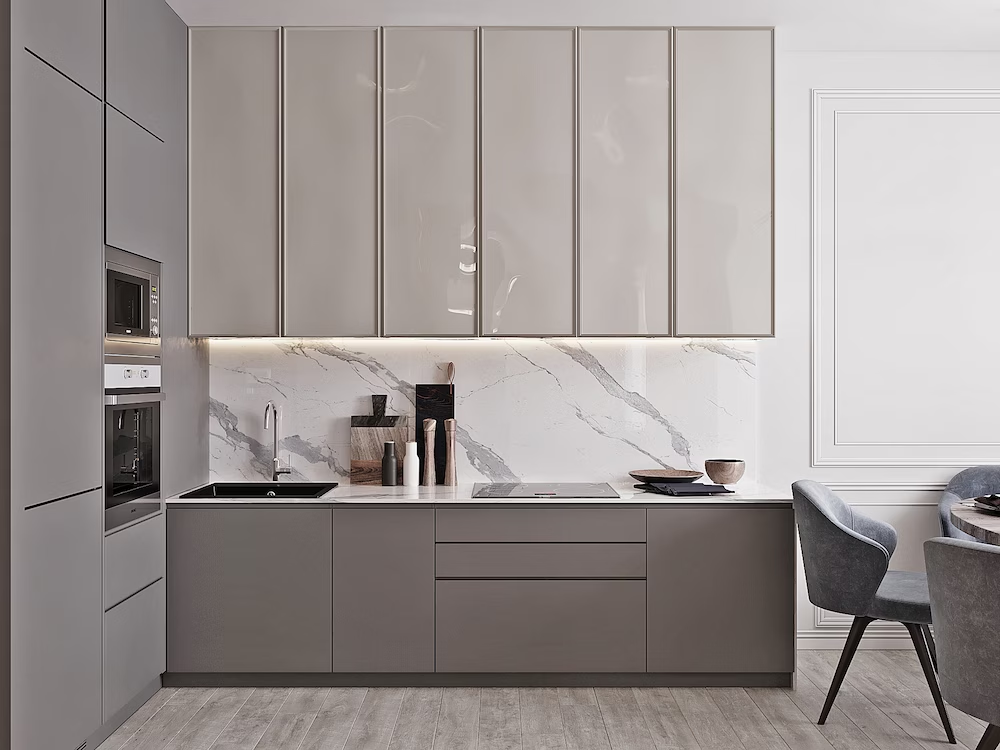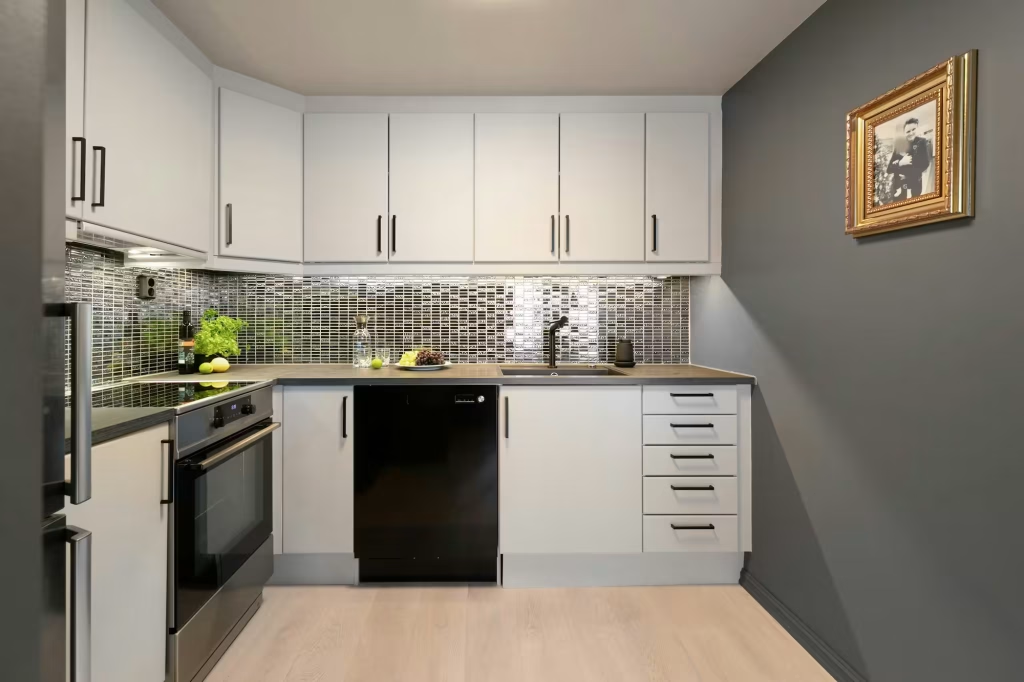
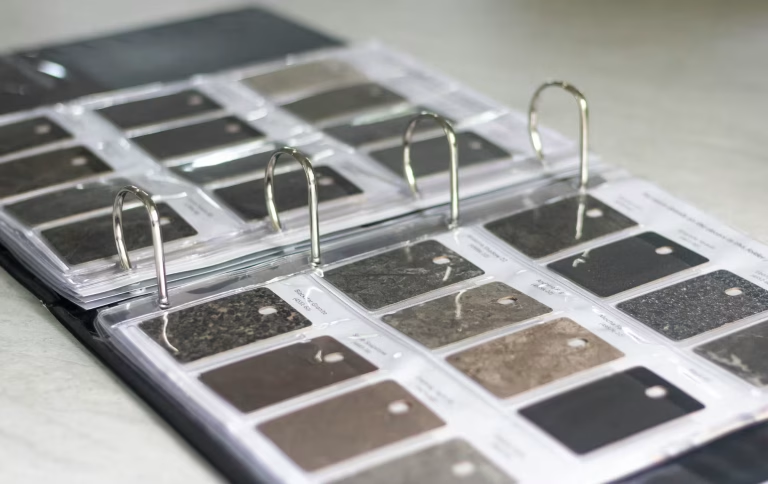
You’re standing in your kitchen, staring at the counter that’s taken years of coffee spills, knife marks, and hard water. You’re ready for something new: sleek, durable, and built to last.
But now you’re stuck in the decision that every homeowner faces: Quartz vs granite countertops, pros and cons, cost, maintenance, resale… which one’s actually better?
And of course, the internet has only made it worse.
One article says quartz is “virtually indestructible.” Another warns you it could discolor. Granite gets praised for natural beauty, then knocked for needing sealing every year. Who’s right?
The truth? Both quartz and granite are excellent countertop materials, but they’re not interchangeable. One might be better for a busy Issaquah home to a family with young kids; another for a Mountlake Terrace couple building their forever kitchen.
This guide breaks down the pros, cons, costs, and real-life considerations of each — and if you’re still exploring your options, you can browse our selection of countertops to see what fits your space best.
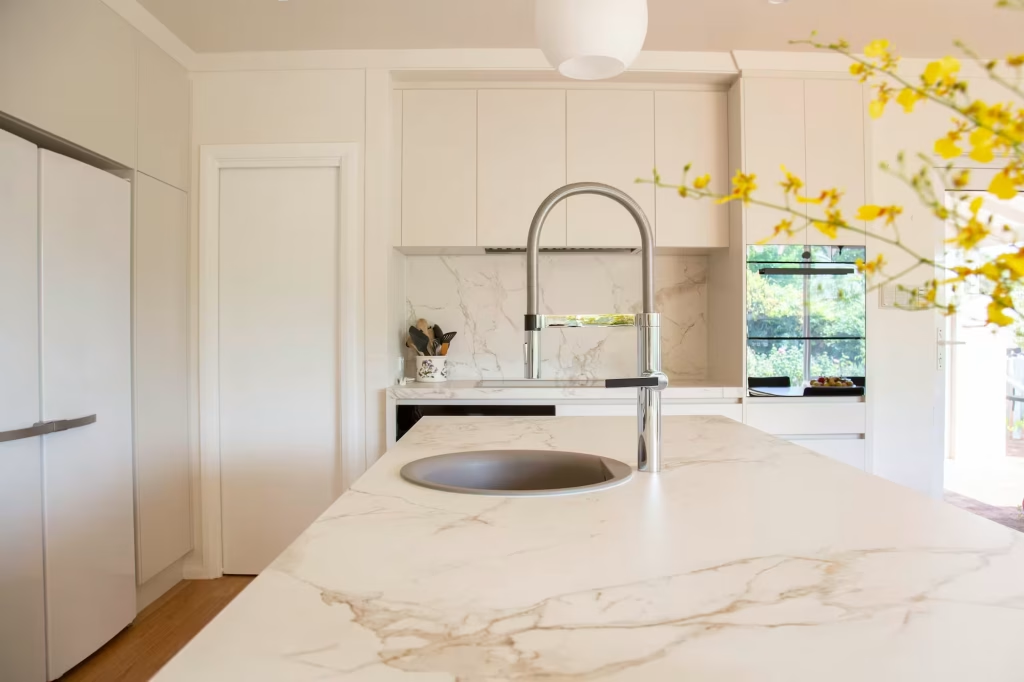
Quartz vs. Granite: What’s the Real Difference?
Before we get into cost, durability, or design style, let’s start with the basics: what exactly are these materials made of, and how do they behave in your home?
Granite: 100% Natural Stone
Granite is a natural stone quarried from the earth, sliced into slabs, and polished for use in kitchens and bathrooms. No two slabs are exactly the same, which makes granite a favorite for homeowners who want something bold, organic, or one-of-a-kind.
Granite tends to have more variation in veining, color, and movement, and many Seattle-area homeowners love how it complements craftsman-style or traditional homes. But it does require upkeep: it’s porous, which means it should be sealed regularly to prevent staining.
Essentially, Granite brings natural beauty and character, but it asks a bit more of you in terms of care.
Quartz: Engineered for Performance
Quartz countertops are man-made, crafted from about 90–93% crushed natural quartz, combined with resin binders and color pigments. The result? A super-durable, non-porous surface with a smooth, uniform appearance.
Unlike granite, quartz doesn’t need sealing, and it resists stains, scratches, and bacteria without extra effort. Quartz is available in a wide range of patterns and colors — including versions that mimic marble or concrete, perfect for modern or transitional homes in places like Issaquah, Mountlake Terrace, or Renton.
Basically, Quartz is low-maintenance, consistent in color, and ultra-durable — ideal for busy kitchens and bathrooms.
So, Which One’s Better? Granite or Quartz Countertops?
That depends on your priorities.
- Want a truly natural material with visible movement and depth? You might lean granite.
- Prefer a cleaner, more uniform look with less upkeep? Quartz is likely your winner.
Both are excellent options: the right choice depends on how you use your space, your personal taste, and how much maintenance you’re willing to do.
Next up: we break down the pros and cons of each material, so you can make a confident, informed decision.
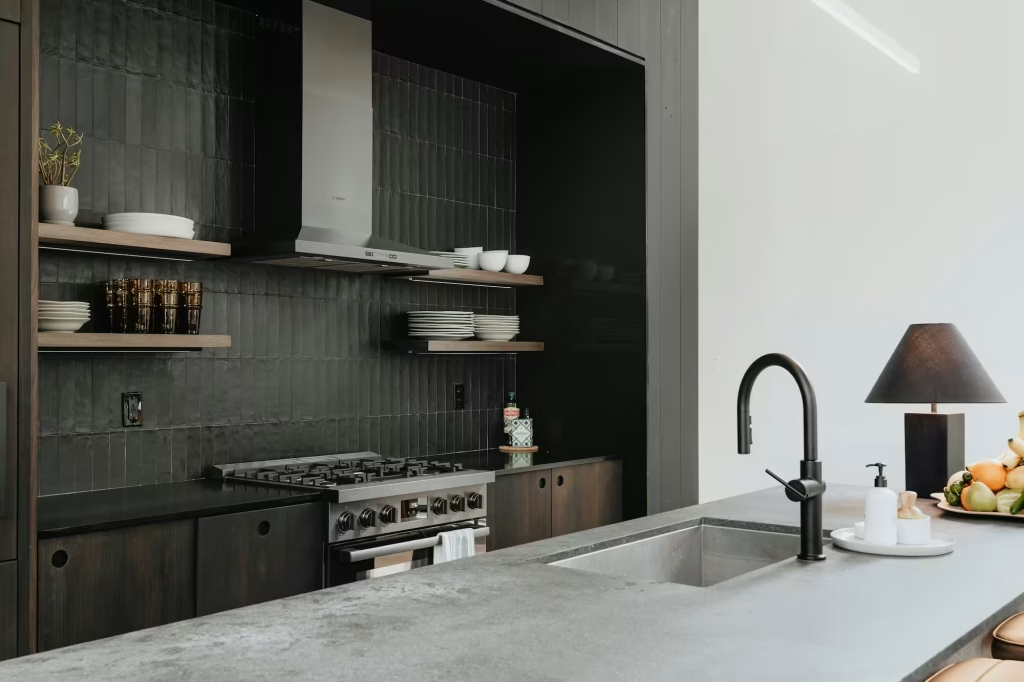
Quartz vs. Granite: Pros and Cons for Seattle Homes
Let’s get into the real-world differences that matter — from how they hold up to daily wear and tear to which one plays nicer with your cleaning routine (and your resale value).
Here’s what homeowners in Greater Seattle should know about each option:
Quartz Countertops: Pros and Cons
Pros:
- Low maintenance: Non-porous, no sealing required
- Highly durable: Resists scratches, stains, and bacteria
- Wide design range: Uniform patterns + options that mimic marble, concrete, etc.
- Color consistency: Great for large islands or matching slabs
- Ideal for busy households: Especially in high-use kitchens or family bathrooms
Cons:
- Less natural variation: Some homeowners prefer the unique veining of granite
- Can discolor with UV exposure: Not ideal for outdoor use or rooms with intense direct sunlight
- May be more expensive than entry-level granite (especially designer quartz brands)
Granite Countertops: Pros and Cons
Pros:
- 100% natural stone: Each slab is unique, which adds character and luxury
- Heat resistant: Can handle hot pans or styling tools without damage
- Strong resale appeal: Still seen as a high-end upgrade
- Timeless look: Works well in traditional, rustic, or craftsman-style homes
Cons:
- Requires sealing: Needs to be resealed every 1–2 years to prevent staining
- More prone to chips at edges if heavy objects are dropped
- Color/pattern inconsistency: Can be harder to match across larger spaces
- More limited color palette: Doesn’t offer as many ultra-modern or muted tones
Some Tips for Greater Seattle homeowners
In the Pacific Northwest (high humidity, indoor heating, and darker winters), many Seattle-area homeowners choose quartz for its moisture resistance, low maintenance, and light-reflecting tones.
That said, granite still has a loyal following, especially among clients near our Lynnwood showroom or those exploring the benefits of buying remodeling products and services from the same provider near Edmonds, where natural stone’s warmth and authenticity continue to be a top choice.
Quick Comparison: Quartz vs. Granite Countertops
| Feature | Quartz | Granite |
| Material Type | Engineered (90–93% natural quartz) | 100% Natural stone |
| Appearance | Uniform, consistent patterns | Natural variation, unique veining |
| Maintenance | No sealing required | Requires regular sealing |
| Durability | Highly durable, stain & scratch resistant | Durable but can chip at edges |
| Heat Resistance | Moderate (protect from high heat) | High (can handle hot pans/tools) |
| Design Style | Modern, transitional | Traditional, rustic, organic |
| UV Resistance | May discolor in direct sunlight | Naturally UV-resistant |
| Cost Range (Seattle) | $$–$$$ | $–$$$ (broader range) |
| Best For | Low-maintenance lifestyles, modern kitchens | Natural aesthetics, timeless homes |

Quartz vs. Granite: What Do They Cost in Seattle?
If there’s one question we hear most at our Lynnwood showroom, it’s this: “What’s the actual cost difference between quartz and granite countertops in Greater Seattle?”
And the honest answer is: it depends, but not by as much as you might think.
Here’s what you should know about pricing in 2025.
Quartz Countertop Costs in the Seattle Area
Quartz typically runs $75 to $125 per square foot installed. That price includes fabrication, material, and labor — and reflects local factors like labor demand and transportation.
Higher-end designer brands (like Cambria or Caesarstone) can push the price up to $150+ per square foot, especially for premium colors or edge profiles.
Iconic insight: Because we source many quartz options directly, we’re often able to offer competitive pricing on custom pieces without the usual markup you’ll find at big-box showrooms.
Granite Countertop Costs in the Seattle Area
Granite costs vary more than quartz, because every slab is unique. Expect to pay between $60 and $110 per square foot installed, depending on:
- The rarity of the slab
- Whether it’s imported or locally sourced
- Color consistency and movement
- Thickness and finish
Basic granite options can be surprisingly budget-friendly, but exotic slabs with lots of veining or custom edging can cost just as much as designer quartz.
Other Cost Factors to Consider
| Cost Factor | What It Affects |
| Slab thickness (2cm vs 3cm) | Heavier = pricier install & stronger visual impact |
| Edge profile | Ogee, bevel, and mitered edges cost more |
| Sink cutouts & backsplashes | Added fabrication and install time |
| Installation labor | Skilled trades in Seattle cost more than national average |
Bottom Line
- Quartz offers predictable pricing, modern colors, and lower upkeep — with slightly higher upfront cost.
- Granite can be more affordable at the entry level, but premium slabs can match quartz pricing (or exceed it).
- Both can be cost-effective when sourced through a provider like Iconic, who handles materials and installation in-house.
Which Countertop Offers Better ROI, and Lasts Longer?
When you’re investing in new countertops, you’re not just choosing a surface — you’re making a long-term decision about your home’s function, style, and resale value. So which material holds up better over time in Greater Seattle homes?
Let’s break it down.
Resale Value & Buyer Appeal
Both quartz and granite are considered premium countertop materials, and both can improve the resale value of your home — especially when paired with quality cabinetry and finishes.
But:
- Quartz tends to appeal more to buyers looking for a modern, low-maintenance kitchen or bathroom.
- Granite still resonates with buyers who value natural materials and timeless design, especially in more traditional or high-end neighborhoods.
Most real estate agents will tell you: countertops don’t sell a home, but bad ones can stop it from selling. Upgrading to either quartz or granite is rarely wasted money.
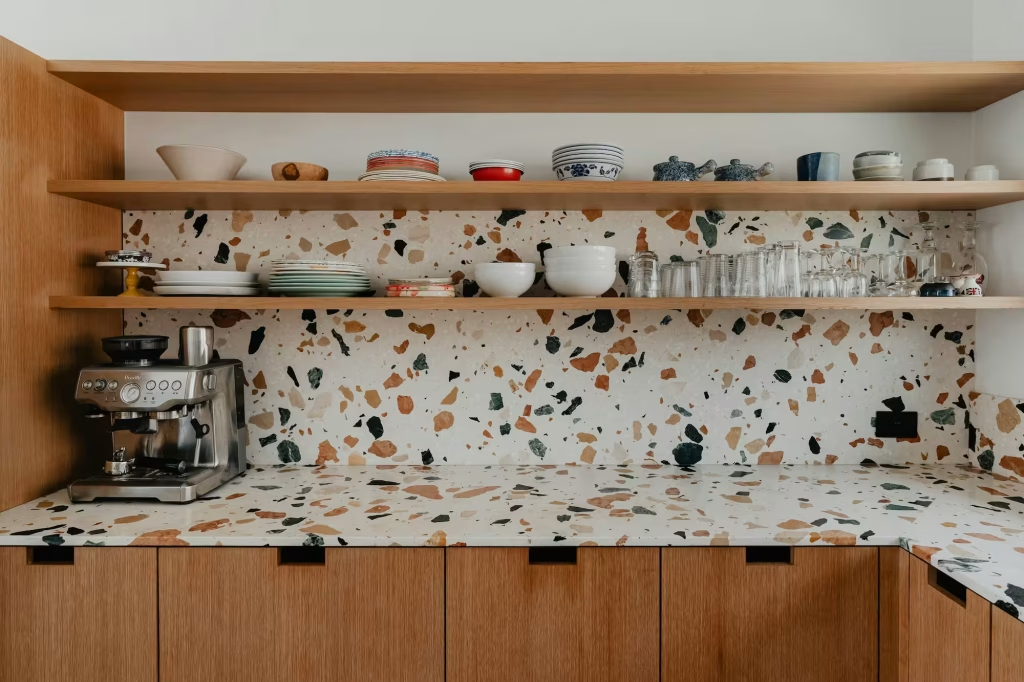
FAQs: Quartz vs Granite Countertops, Answered
Which countertop material is more popular in Seattle right now?
Quartz has become the more popular choice in the Greater Seattle area, especially for modern and low-maintenance kitchens. That said, granite still appeals to homeowners who want natural stone and timeless character.
Do quartz countertops increase home value like granite does?
Yes. Quartz is now widely recognized by appraisers and buyers as a high-end material, comparable to granite in terms of resale appeal. Both materials add value when installed professionally and paired with good design choices.
Will quartz discolor in sunlight?
Quartz can discolor or fade slightly with prolonged direct UV exposure, especially in bright rooms with floor-to-ceiling windows or skylights. Granite is naturally UV-resistant and better suited for spaces with strong sunlight.
Is granite more eco-friendly than quartz?
It depends. Granite is natural but requires quarrying and international transport. Quartz is engineered, which uses resins and manufacturing energy—but some brands use recycled content and local sourcing. The most sustainable choice often comes down to the supplier and installer.
Can I install quartz or granite on my own?
DIY installation is not recommended for either material. Both are heavy, require precise fabrication, and need professional equipment to cut, polish, and secure safely. Mistakes in install are costly and can void warranties.
Does quartz ever need sealing like granite?
No. Quartz is non-porous and does not need sealing. Granite is porous and must be sealed every 1–2 years to maintain stain resistance and longevity.
What’s the average lifespan of quartz and granite countertops?
With proper care, both quartz and granite can last 20–30+ years. Quartz requires less routine maintenance, but granite’s natural durability can match its longevity if sealed regularly.
Can I get a custom quartz or granite countertop in the Seattle area?
Yes. Iconic Cabinetry offers custom quartz and granite fabrication, including edge profiles, sink cutouts, and slab matching, all handled in-house at our Lynnwood location for full design control.
How long does it take to install quartz or granite once I’ve chosen a slab?
Typically, 2 to 3 weeks from final slab selection to full install. Timelines depend on fabrication complexity, edge profiles, and site access, but our team keeps things coordinated from showroom to install.
“Moe and his team did an amazing job on my kitchen! The design turned out better than I imagined. They were professional, helpful, and easy to work with. I love the soft-closing cabinets and the beautiful countertops. Moe even helped me pick out the handles and showed me where to get them. Highly recommend!”
– Jerry Jones, 2025 customer

Why the Right Fabricator Matters More Than the Material
You’ve done the research. You’ve compared colors, durability, and costs. But here’s something most homeowners overlook, even the best countertop material can fall short if it’s not fabricated and installed properly.
What does that mean in practice?
- Seams that don’t line up
- Edges that don’t match
- Cracks or chips during installation
- Long delays from outsourcing or miscommunication
At Iconic Cabinetry, fabrication and installation happen in-house. That means tighter quality control, faster timelines, and better results, whether you choose quartz, granite, or something else entirely.
When your design, materials, and install all come from one team, the final product doesn’t just look better, it performs better, too.
Still Deciding Between Quartz and Granite? Let’s Talk.
You don’t have to make the decision alone.
Visit our Lynnwood showroom to see quartz and granite countertops side by side, ask questions, and explore finishes, edges, and cabinet pairings with real designers, not just salespeople.
Whether you’re remodeling one bathroom or redoing your entire kitchen, our team is here to help you make a choice that fits your style, your lifestyle, and your budget.
Let’s build something that lasts. Schedule your consultation or drop by; we’d love to help.